
Three Maps to 2038
AI Scenarios to Sharpen Civil Society's Strategic Capabilities
Three futures. Three demands. One sector that cannot afford to guess wrong. This report stress-tests Civil Society against stagnation, progress, and rupture — and finds that in every future, the world needs more from us, not less.
The window is closing. Path dependencies are forming. Somewhere between the model that hallucinates and the one that doesn't, between the climate deadline and the governance vacuum, the foundation of the next fifty years is being poured. Civil Society has not been at the building site. It needs to be.
Built on the Oxford Scenario Planning Approach and grounded in narrative futures set in England, Kenya, and Singapore, this is the strategic case for building new capabilities now — before the foundation sets.
Read the full report here
Who is this for?
five doors into the same building

Civil Society Leaders: You are more consequential in every future. Here's what to build now.

Funders & Foundations: How to build a portfolio resilient to three divergent futures — not just one.

Policymakers: Civil Society is democratic infrastructure. Here's the governance gap you're missing.

AI Labs & Tech Companies: Your social licence to operate depends on a sector you have mostly ignored.

Social Science Researchers: Your models treat Civil Society as a dependent variable. That's about to be wrong.
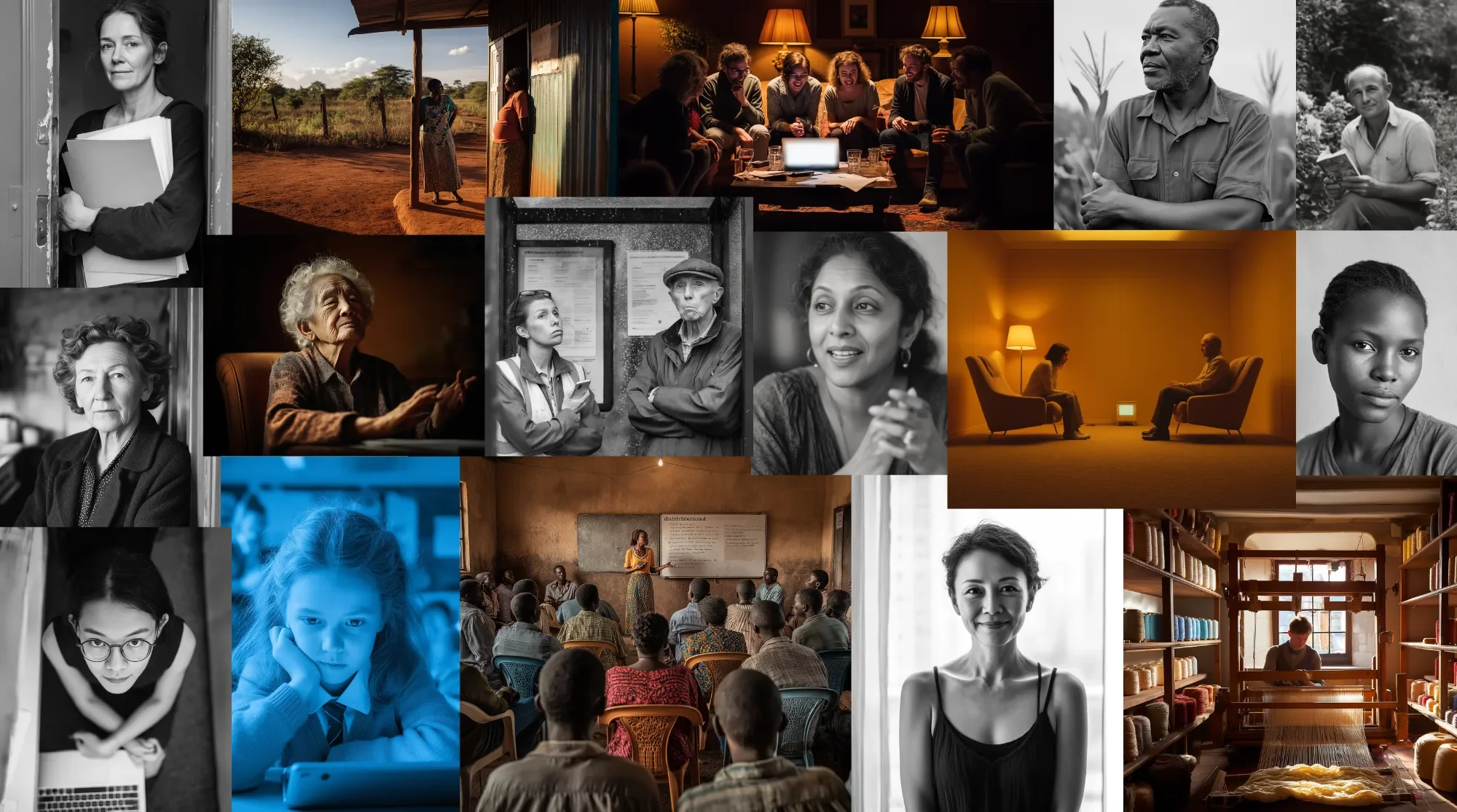
The people in Three Maps
The Thinking Behind the Work
Companion essays
What If We're Wrong? Three null hypotheses. The intellectual honesty this work required.
What If We Win? What Civil Society actually looks like when it rises to the moment.
Holding Scenario A Lightly Exploring small but consequential variations in the baseline stress test.
How These Were Made: A note on method, detailing our LLM-supported twist on the Oxford Scenario Planning approach.
Be First to Shape What Comes Next
We are building our first Civil Society AI curriculum. Not a tool guide. Not a policy primer. A genuine capacity-building programme for organisations that want to lead.
Sign up to hear when it's ready — and to help shape it.
We will not flood your inbox. When we have something worth saying, we will say it.


Three Maps to 2038: AI Scenarios to Sharpen Civil Society's Strategic Capabilities
© 2026 by Anthony House is licensed under CC BY-SA 4.0